Ye olde Maui stomping grounds. (Pics from Maui!)

Still with my plethora of pics from our family trip, I’m back to share more. (And there will be more in one or two posts after this one!) As mentioned a couple of posts back, there were some precious places of personal/historical interest on Maui that I wanted to show Callaghan. There were surprises awaiting me, as well. For instance, there’s now a Target in Kahului, Mom’s hometown. It’s the first and only Target on Maui, and it looks like that proverbial sore thumb. Long gone are the days of unpaved roads, of Grandma’s backyard growing wilder the deeper my brother and I plowed through until we found ourselves in a dirt clearing beneath trees, surrounded by strange and colorful sights. The fairgrounds! Grandma’s backyard was a Lewisesque wardrobe with wondrous surprises on the other side; it would have us tearing through the overgrowth back to the house to ask Mom for small money.

Now, there’s a chain-link fence back there beyond which looms a large, round concrete structure. Something industrial that looks like a race track from the outside.

But the Guri Guri place is still there at Maui Mall, so all’s right with the world, as Browning would say. We took Callaghan there because Tasaka Guri Guri is a must-visit! We used to walk there. Guri Guri is a mysterious frozen dessert whose nature could best be described as a sherbet with cream. You would think that’d make it an ice cream, except it’s definitely not… it can’t be described (the best of us have tried). Guri Guri  was a favorite treat for my brother and me, though I don’t eat it anymore. It’s a small, family-owned business, and by family, I mean that the Tasaka family has fervently guarded their recipe and refused the notion of expansion. Tasaka’s remains more a lemonade stand than a commercial business. That recipe will go with them to their graves.

Speaking of graves, the first place we visited after Mom and Dad picked us up from the airport was the Maui Memorial Park in Wailuku, where my Mom’s family has their plots. We went to take flowers to my Grandparents. Callaghan had the honor of dividing and arranging the flowers while Dad stood with a foot over the sprinkler, shielding us from the violent and far-reaching spray of water; Mom observed the flower-arranging, my brother cleaned off the flower receptacles, and I went stalking the nene who were wandering about the grounds. I had to get some pics, you see.

The nene are the state bird of Hawaii. Pronounced “nay-nay,” this magnificent species of Hawaiian goose had its name long before the dance craze.

I also wanted to show Callaghan the Buddhist temple where my Grandparents were heavily involved. They were devout Jodo Shinshu Buddhists, as is tradition in my family… and, as such, the temple was an important part of our lives. At home in California, we attended our local Jodi Shinshu temple, but my butsudan came from this temple in Kahului. Grandpa had been a carpenter, and he’d refurbished the donated butsudan especially for me.

A disheartening change: sugar cane production in Hawaii has officially come to an end. We drove by the cane fields in Puunene near Grandma’s house (Mom was born at the hospital in Puunene) and beheld smoke from the last fire that would burn in the fields, and then the last steam pouring out of the factory pipes. After this harvest cycle, it’s all over, sugar cane farming in Hawaii. The sugar cane fields in the Kahului area on Maui are the last to go, and they’re already gone, the dead growth just a field of rubbish.

I love Mom’s recounting of Grandpa bringing home leftover raw sugar cane for her and her sister and brothers. They also procured some themselves: they would stop on their way through the cane fields (on the Big Island, Dad, too, had to walk through the sugar cane fields to get to school), where they’d cut a stalk, peel it, and divide it into sections. Then they’d each have a piece to chew and suck out the sugar syrup before spitting out the pulp.

The next time we go to Maui, we plan to go to the sugar cane museum to visit the history of the sugar cane industry in the islands… now that it’s a thing of the past.

[Aside: Hawaiian pidgin was developed as a result of foreign immigrants working with native Hawaiians at the sugar cane plantations; they needed a common language in order to communicate. Pidgin derives mostly from Hawaiian, American English, Samoan, Japanese, Portuguese, Chinese, Filipino, and Korean.]

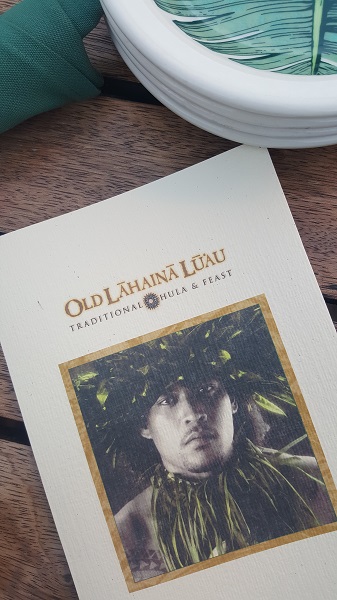
What else? We went to a luau, the Old Lahaina Luau (it was one of the two times we ventured into Lahaina). We went with the wedding party a couple of days before the wedding, which was also on Lahaina (on a boat from Lahaina, that is). The luau and the wedding were joyous, and it was wonderful getting to know new family and friends!

For Callaghan and me, one of the highlights was getting to spend time with our nephew, Rudy, who is an awe-inspiring human being and one of the best people I know. It was just a wonderful family trip, brief as it was. Every minute of it was special.

In my next post, I’ll include pics from the road to Hana, and also from the haleakala volcano crater, two of Maui’s many special features that I thought Callaghan would enjoy.

Here are a few pics from some of the above-mentioned:
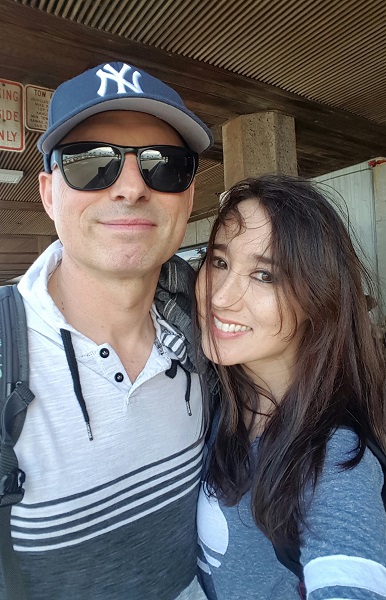
 

Off the plane!

Off the plane!


Tired and bedraggled, but there! Mom and Dad were armed with sushi for us to eat on our way to the Maui Memorial Park. Mine was brown rice and veggies.


Maui Memorial Park in Wailuku
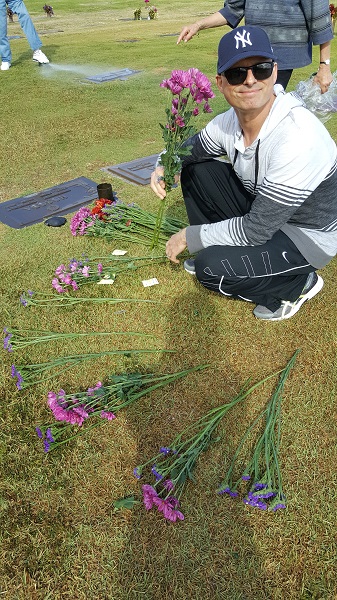
Maui Memorial Park in Wailuku


Callaghan sorting and arranging flowers for my Grandparents' graves.

Callaghan sorting and arranging flowers for my Grandparents’ graves.


The cremains of most of Mom’s family are here.
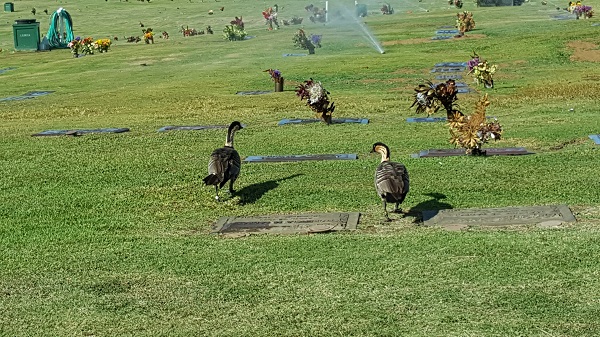
 

Nene (state bird of Hawaii) on the cemetery grounds.

Nene (state bird of Hawaii) on the cemetery grounds.


The nene are such magnificent birds! They evolved to adapt to a lava environment.


Kahului Hongwanji Buddhist temple

Kahului Hongwanji Buddhist temple


The Buddhist temple where my Grandparents spent many hours each day, and where we went when we were staying with them.
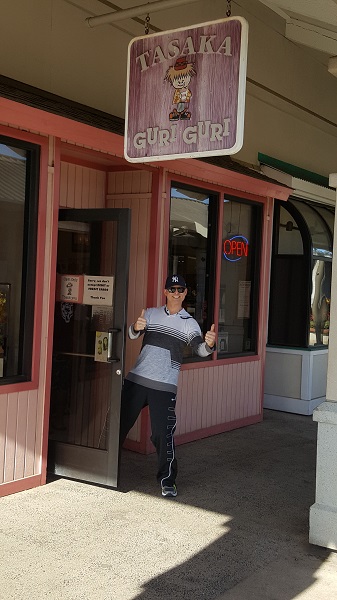
 

Callaghan at Tasaka Guri Guri!

Callaghan at Tasaka Guri Guri!


Next stop, Tasaka’s!
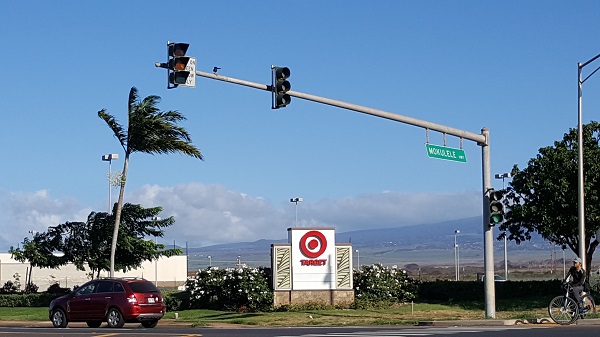
 

Target on Maui

Target on Maui


The Target there in Kahului looks so strange. We did not have reason to go inside.
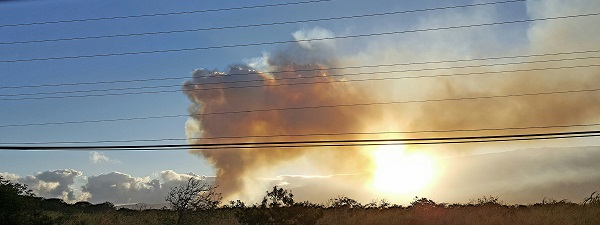
 

Smoke from the sugar cane fields in Puunene. The cane is cut and set on fire to burn off the leaves, leaving the stalks to be taken to the factory and boiled down.

Smoke from the sugar cane fields in Puunene. The cane is cut and set on fire to burn off the leaves, leaving the stalks to be taken to the factory and boiled down.


Driving by the final sugar cane harvest in Hawaii. I’m glad we were there to see it.


HC and S sugar cane factory. The steam is from the sugar cane being boiled down.
HC and S sugar cane factory. The steam is from the sugar cane being boiled down.


Old Lahaina Luau

Old Lahaina Luau


The luau was a blast! I had nothing luau-y to wear, so I just wore all black. But it made the lei stand out, right?


Goofing around while taking pics with family and friends at the luau.

Goofing around while taking pics with family and friends at the luau.


My nephew Rudy!

My nephew Rudy!


Rudy is The Man! We love our nephew to the moon and back.


On the boat for my brother's wedding.

On the boat for my brother’s wedding.


My brother’s wedding took place on this boat on the last day of our trip. The sun set while we ate dinner; the lights on the Lahaina coast in the dark of night were beautiful. After leaving the boat, we walked through Historic Lahaina Town to get shave ice from a side-street shave ice place. (I enjoyed Callaghan’s shave ice vicariously through him, as I didn’t order one.)

 

Lahaina from the boat.

Lahaina from the boat.


At my brother's wedding... pic taken with Mom.

At my brother’s wedding… pic taken with Mom.


This pic of me at the wedding was cropped from one with Mom by my side. She does not want to appear online, so you get only the half with Yours Truly.


Complete rainbow

Complete rainbow


What would Hawaii be without its rainbows?

All pau! (The end.)


The First-World Problems of an English Major.

A fact of life: One never knows how many Stephen King books one owns until one moves. And yes, “Stephen King” is an adjective.

Decent progress has been made in the unpacking arena. I’ve now arrived at the books part of it, and… and nothing. I’ve just arrived. And I’ve taken the books out of the boxes – go me! But that’s where my victory dance ends, because now I have to decide how to sort all the books, and for some reason, I’m overwhelmed.

Well, I know why. It’s because this move is the last move for the foreseeable future; as far as I’m concerned, this abode is the forever abode, so my OCD-tendency-leaning self won’t let me get away with shoving books on the shelves every which way “because we’re going to move one day anyway” anymore.

I’ve carried books around with me all of my life. Over the years, I’ve sold, traded, donated and given away hundreds of books. I’ve lost some; I’ve “lent” some. But somehow, I still always move with at least ten good-size boxes of books.  My current collection includes some that I’d left in France (a pile of Shakespeare and some Russian lit, some of them duplicates, mysteriously enough) in my attempt to bring down the weight of our overseas shipping, and I have a small stack set aside for a garage sale we’re planning in the upcoming weeks. Still, I’m now confronted by piles like this:


Book piles in the living room.

Book piles in the living room.


And this:


Piles of books on the desk in the guest bedroom.

Piles of books on the desk in the guest bedroom.


And that’s not all of it. I also have a pile of books about Buddhism/eastern philosophy beneath the Butsudan, a pile of cookbooks tucked away in the kitchen, a pile of random books on the big bookcase in the dining area and a smattering of books in my office. And these are all just my books we’re talking about… Callaghan, too, has lots of books in his office.

This is what the inside of my mind looks like when I’m standing before these books:

Should I group them by century? Should I separate the American lit from the British lit? Should I separate them by century and group the Americans and Brits within the centuries? Should I group all the anthologies together, or should I put the poetry anthologies in the poetry section? Should I mix the pocket-size books with the trade paper and hardcover books? If I lump all the pocketbooks together, should I organize them by genre, or alphabetically by author, or both? Should I categorize the books by genre, only? Should I nest genres within nationalities within centuries (i.e. 19th-century British Romantics)? Should I mesh poetry and prose within those groupings, or should I keep poetry and prose separate? And which groups should I position where in the bookcase? Should I group the Russian lit alongside the British lit alongside the American lit, or would the Russian lit make more sense neighboring the philosophy section? Should I line the entire top of the bookshelves with poetry volumes, using them to bridge the two? Should I shelve the poets in alphabetical order? How should I organize the poetry… by era, or by style? If the era and style are inseparable (as with the confessionalists, the post-modern poets, the New York School, the avant-garde imagists, the Black Mountain poets, etc.), should I attempt to merge all the books similarly? What about my textbooks and essays about poetry and prose… should I put them with their authors, or in a category of their own? Should I put the surrealism section next to the magical realism section, or should I put the surrealists next to the poets? Should I put the biographies and autobiographies of poets and authors with the books those poets and authors have authored, or should I make a separate category for biographies and autobiographies? What about the smaller sections like classical Greek lit, medieval lit and non-Shakespearean drama? Should I separate Shakespeare’s poetry from his dramas, or keep them all together in the Elizabethan section? (Would it be weirder to have a poetry section without Shakespeare’s poems, or to have a Shakespeare section without his poems?) What about the contemporary literature? The non-fiction? Should I separate the political non-fiction from the general non-fiction? What about creative non-fiction? What about my western religious texts? The feminist texts? Should I group my books in French together, separate from the books in English, or should I merge them?

Etc., etc., etc., ad infinitum, ad nauseam.

I’ve been staring at these piles of books for a few days now.

I’ve already decided to put reference books and instructional books, including all of my French grammar books and dictionaries, in the big bookshelf in the dining area.

I’m hoping that somehow, my collections of Laura Ingalls Wilder, Nancy Drew, Agatha Christie, Stephen King, Lee Child, J.K. Rowling, Anne Rice and the like, along with random other books, will all fit in the tall, narrow bookcase in the guest bedroom. I like the idea of stocking that room with brain candy for visitors who are on vacation (Callaghan’s going to add some books in French for our visitors from France).

None of these considerations came into play in the apartment we’d just vacated. I knew it was temporary, so I created double rows of books in some parts and didn’t care that the ones in the back rows weren’t visible. In this house, though, I want to be able to see every single book, and I want to be able to find books easily. In the past, I’d typically arranged books alphabetically, by author. I’m craving that level of organization in my life again because I’m craving rootedness. I feel like if my books are in order, then my life will be in order. When I was a kid in grade school, some of my friends used to tease me about my reading, saying, Kristi’s going to turn into a book! Maybe that’s finally happened.

On that note, I’m off to spend the day away from the office, going to appointments, seeing people, running errands, and so on. Happy Friday, All!

Here’s Ten Dollars; Keep the Karma.

Sometime in the nineties, I started noticing tip jars (often just plastic cups) sitting near the cash registers at certain casual restaurants… specifically, tip jars bearing cute little signs to the effect of, “Tip! It’s good for your karma.” I still see them around, and I always think to myself that if someone is going to use a religious concept as a charming way to get people to leave optional tips, why stop at eastern religions? One could just as easily frame it in western religious terms: “Tip! All your sins will be forgiven,” or “Tip! You’ll go to heaven.”

But I know the answer to that. Western religions aren’t hip and trendy in the western world the way eastern religions are, so the lure of “good karma,” it is. Moral causality. Throw money into the jar, and the act will work in your favor.

It’s a much more serious matter to talk about sin and heaven. Whether or not we Americans believe in karma, seeing the word “karma” on a tip jar isn’t going to pack the same psychological punch as the words “sin” and “heaven.” We’re largely a nation of people hard-wired to react strongly to those words in one way or another. The notion of karma just isn’t culturally ingrained in us in the same ways.

Where “karma” on a tip jar is cute, clever and cool, the words “sin” and “heaven” on the same jar would come across as preachy, flippant or even sacrilegious, and the effect would be adverse because of it. No matter how many ribbons and rainbows and flowers and smiley faces you put on it, a jar labeled with holier-than-thou signage isn’t going to work.

So, fine… it’s cool, cute, hip and trendy to decorate your tip jar with the word “karma.” Here are some examples I found online:


Karma: the new currency!

Karma: the new currency!


Instant karma. Just add hot water and stir.

Instant karma. Just add hot water and stir.


Remember this guy? I couldn’t resist putting him here, since he was all over the internet at about the same time the “karma jars” were also popping up everywhere.

Remember this guy? I couldn’t resist putting him here, since he was all over the internet at about the same time the “karma jars” were also popping up everywhere.


It’s light and fun and people dig it. I get that. I myself use the word “karma” lightly, every time I park somewhere and think, good parking karma! because I scored a prime parking spot. Here’s the thing, though. Here’s why “karma” on a tip jar bugs me. It’s one thing to remark and laugh about “parking karma,” but another thing entirely to use the word in an attempt to influence peoples’ actions.

Moreover, there’s this: I usually see the “karma jars” in trendy eateries where you order and pay for your food at the counter. Tips at these kinds of establishments are optional and gratuitous, since you’re not receiving table service. Tipping gratuitously at a counter in this case is simply giving.

Giving, in eastern religions such as Hinduism and Buddhism – to simplify, let’s just default to Buddhism, since that’s the trendiest of the eastern religions, and that’s the one I know the best – is dana, which is a Pali word that indicates “selfless” giving. I shall be helpful to others. To give selflessly means that you don’t want or expect anything in return. You give without thinking of what you might get back.

I grew up spending Sunday mornings sitting in a Jodo Shinshu church (Jodo Shinshu is a type of Japanese Pureland Buddhism on the Mahayana side) listening to dharma talks (sermons) and going to dharma class (Sunday school), and I’ve heard countless lectures on what it means to be selfless. From what I understand, putting a sign on a tip jar that says, “Tip! It’s good for your karma” is actually anti-Buddhist in nature. Dropping money into a jar thinking of what you’re going to get out of it later isn’t Buddhist. It’s the opposite of Buddhist. It’s selfish, not selfless, because you’re putting money into the jar thinking of yourself.

I just can’t see it as cute or cool or hip or whatever. All I can do when I see these “karma” tip jars is try to be a good Buddhist and have compassion, but it’s hard when I’m inwardly rolling my eyes and biting my tongue. I am not a good Buddhist.  I’m always trying, but I see where I need to tweak my meditation practice in an attempt to improve.

The proliferation of tip jars asking for money with the promise of something good in it for me has always irked me, as the general cultural appropriation of eastern religions by westerners has irked me (please note that I’m differentiating between earnest students and converts to eastern religions and those who just dig certain aspects of the religions to the point of, say, slapping a “karma” sign on a tip jar while not actually knowing what that means, much less studying and practicing said religion). Buddhism seen as a hip and trendy cultural thing just confounds me. I don’t know what to make of it, really.

I’m confounded by those tip jars.

I’m confounded when people think that being Buddhist means that you have to be a vegetarian. (Unless you’re a monk in certain temples, you can eat whatever you want.)

I’m confounded when someone claims to be Buddhist, yet speaks authoritatively of having a soul. (Buddhists don’t believe in the existence of souls.)

I’m confounded when someone claims to be Buddhist, yet speaks of sin. (Buddhists don’t believe in the concept of sin.)

Buddhist philosophy is difficult and complex, and I’m certainly no one to judge when Buddhist-curious people or admirers of Buddhism or actual converts display ignorance. I’ve been working toward the realization of a higher prajna (wisdom) my whole life, and I can tell you, it’s not easy. I have a stack of books, some of which I’ve had as long as I can remember, as they were passed down to me by my Grandmother, filled with my questions scribbled in the margins, post-its with more questions marking pages, hundreds of my questions that haven’t yet been answered. Karma is just one of many challenging concepts in eastern religions, so the sight of those tip jars with their blithe karma signs written by people who (probably) aren’t Buddhist acting like they care about the welfare of my karma so they can get money just annoys me if I see them when my patience levels are low. What do you know about karma? I want to ask on the days I’m cranky when I see the karma tip jars. Please enlighten me, because I was raised Buddhist, I am still Buddhist, I’ve been studying Buddhism/Buddhist philosophy/eastern religious philosophy all of my life, and I still don’t fully grasp the doctrine of karma.


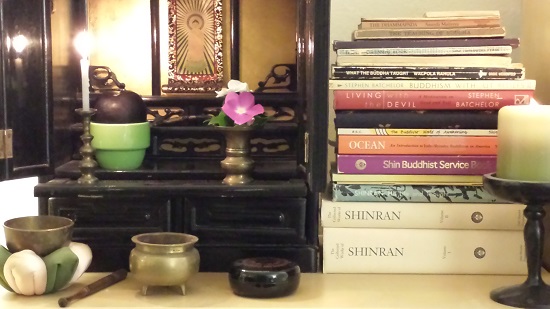
My Butsudan (altar/shrine) with my 20+ books and pamphlets (some not shown) on the subject of Buddhism, ranging from ancient spiritual texts to college-level textbooks.

My Butsudan (altar/shrine) with my 20+ books and pamphlets (some not shown) on the subject of Buddhism, ranging from ancient spiritual texts to college-level textbooks.


The truth is, I probably have a decent grasp on eastern religious philosophy, but its complexity is such that some aspects of it seem to elude my understanding the more I study it, and at this point in my life, I just want to enjoy the feeling of serenity and peace I experience when I release my mind during my practice. So I don’t study it as much anymore. I just do my practice and try to live by Buddhist principles as best as I can. I try to “practice intention with detachment from outcome.” I try to practice mindfulness and gratitude, saying “thank you” freely and often, and really feeling it. And I try to be patient, but as you can see from this post, I still need a lot of work in that area. A part of this is that I tend to be impatient by nature (in some contexts).

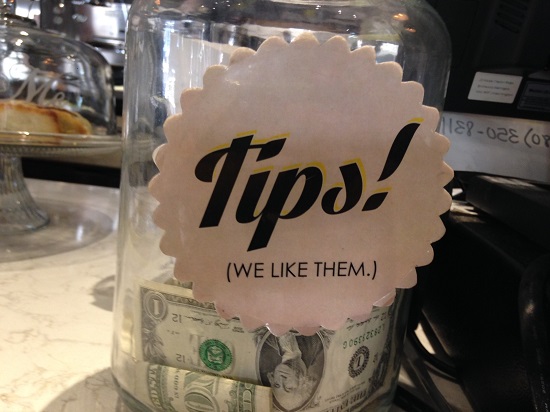
This tip jar at one of my favorite local restaurants is a welcome breath of fresh air every time I see it:


Tips! Why? Because WE LIKE THEM. Thanks for keeping it real, Chop Shop Tempe!

Tips! Why? Because WE LIKE THEM. Thanks for keeping it real, Chop Shop Tempe!


I’m going to happily continue partaking of their somewhat luxurious fare every once in a while, because the Chop Shop Tempe guys are honest, and honest is what’s cute, cool and clever… plus, their raw vegetable salad with grilled tofu (which I order without cheese) is delicious and vegan and therefore good for my karma! (If you know me well, you know that I’m giggling as I write this.

Carry on.