My Top 8 Favorite Things about living in France.

A friend of a friend is planning to move to France. My friend asked if I’d share my insights about living there, and I thought I’d share some of those things here, too… because, I realized, that’s something I haven’t done that might be interesting or helpful to someone, in some way.

So I gave it some thought and came up with a list of my top eight favorite things about living in France. These are, of course, my own, personal top favorites, based on my own experiences. Others may have had different experiences. These were the things that made a difference to me or impacted me in some way, big or small, and helped to make life in France an enjoyable experience.

Also! These are things in addition to the wonderful people I met while I lived in France… the dear friends I made there, the many memorable experiences I had with Callaghan’s family, and so on.


1). Hospitality.
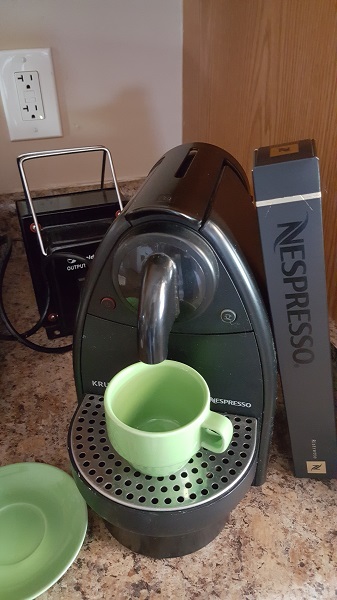
 

Typical French hospitality looks like this.

Typical French hospitality looks like this.


Everyone I met in France was gracious and hospitable in their own homes. They commonly ask you over for apéritif or coffee (by “coffee,” I mean espresso… very strong espresso), and if you show up at someone’s house, you will be served something or another (usually coffee).


2). Bread.


Our favorite boulangerie in Nice.
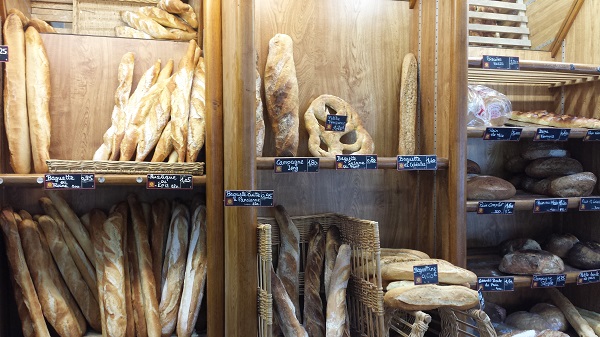
Our favorite boulangerie in Nice.


Some of the bread inside of our favorite boulangerie in Nice.

Some of the bread inside of our favorite boulangerie in Nice.


As you know, I love bread. There is a boulangerie (bakery) on every corner in France, it seems, and inside each one, there are freshly baked baguettes that are simply sublime. Pain de Campagne is my favorite, but I love all of the breads I’ve tried. In France, making bread is an art form. Some boulangeries make better bread than others, but even the mediocre French breads at bakery chain stores are fabulous and incomparable to breads I’ve had in the States!


3). Socca.
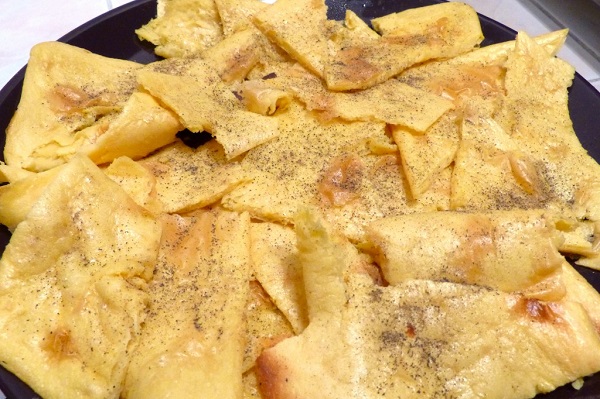
 

Socca (regional food, Nice)

Socca (regional food, Nice)


Socca is a signature food of Nice, a popular local street food. It consists of chickpea flour, water, olive oil, salt, and pepper stirred into a batter and traditionally cooked on a copper plate in a wood oven. After it’s cooked, it’s broken up into pieces in the pan and served in a pile. Thinking of it brings back fond memories for me, since we lived in Nice half the time we lived in France. Should you ever visit Nice, you should try it. According to Callaghan, niçoise fishermen used to eat socca because it’s cheap. It’s still cheap.


4). Cell phone affordability.


Orange, one of the major cell phone service providers in France

Orange, one of the major cell phone service providers in France


Speaking of cheap, cell phone service is one thing about life in France I definitely miss. In France, your monthly cell phone bill comes out to roughly $20.00, flat… and that includes unlimited everything (texting and calling, including calls to the U.S., South America, Asia, etc.)


5). No tipping.


The euros I still had when we moved back here, an ATM receipt, and my coin purse.

The euros I still had when we moved back here, an ATM receipt, and my coin purse.


(“Je suis à sεc” translates as “I’m broke.” The “E” looks the way it does because that’s the euro sign.)

There’s no expectation of tipping for either goods or services in France. This is convenient. (There’s also a flip side to this, but we shall not go into it, as this is a positive list.) In restaurants, tips are included in the checks, for instance. Unlike here in the States, employees in service industries aren’t paid minimally with the assumption that tips will supplement their take-home pay. The amount you’re charged is the amount you pay, period.


6). TGV (Train Grande Vitesse).
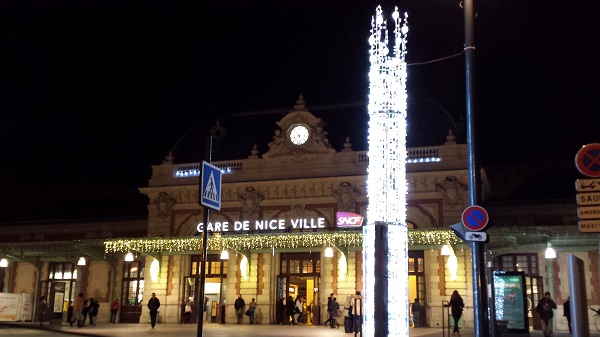
 

 Gare de Nice, the TGV station in Nice

Gare de Nice, the TGV station in Nice


The TGV is my favorite way to travel between regions in France. The train is super fast, as indicated in its name, and it’s quiet, smooth, clean, and comfortable. It’s also affordable – from Nice to Paris, for example, tickets range from 19 to 36 euro (the higher price is for 1st class). There’s a café car where you can purchase beverages, light meals, snacks, and candy. You can charge your laptop and other devices on the train, and there’s plenty of legroom. The TGV is the way to go when traveling from one part of the country to another!


7). La fnac.


An old plastic bag from one of my many purchases at la fnac.

An old plastic bag from one of my many purchases at la fnac.


This one really is personal to me. I’m putting la fnac on the list because it’s my favorite store in France. La fnac is a big, multi-level bookstore, and I could (and often did) spend hours on end there. My favorite area is the café, which is kind of reminiscent of the restaurants in IKEA, but larger. You can get food or beverages there and station yourself at a table and stay there indefinitely with their free wi-fi. I loved spending time there! I bought my first Reacher novel at the la fnac in Nice and read half of it in one afternoon sitting in the café.


8). Art and history.
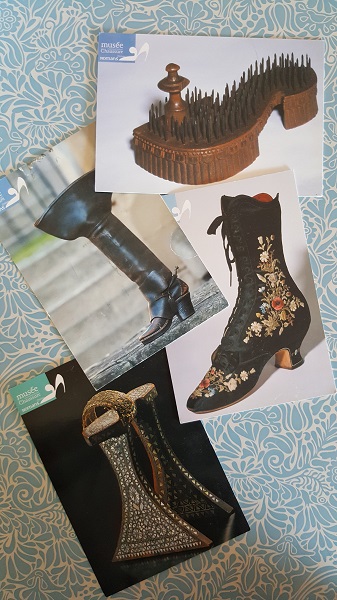
 

Musée International de la Chaussure in Romans-sur-Isère

Musée International de la Chaussure in Romans-sur-Isère


Living in France is like living in a gigantic museum.

Even villages in more remote regions are rich in history and filled with art and architecture that I found to be breathtaking. Romans-sur-Isère (near where we lived), for instance, is famous for having been the home of the factory of Charles Jourdan, one of the first houses of Haute Couture shoes, if not THE first. This museum, Musée International de la Chaussure in Romans-sur-Isère, has to be one of the most comprehensive museums of shoes in the world. I didn’t think I’d enjoy it so much since I’m not especially interested in shoes, but it’s amazing how viewing and reading about shoes through the ages unfolds as a detailed history lesson in human culture.

Then there are places such as:
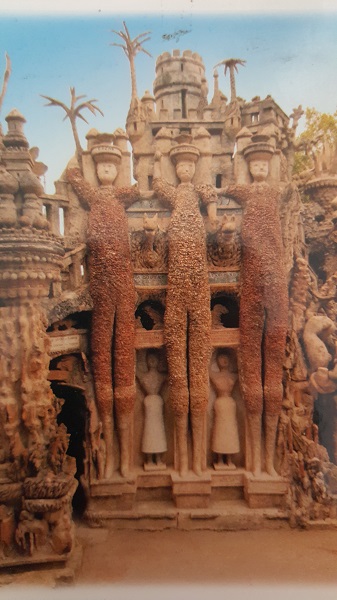
 

Palais Idéal du Facteur Cheval in Hauterives (between Valence and Lyon)

Palais Idéal du Facteur Cheval in Hauterives (between Valence and Lyon)


Between 1879 and 1912, facteur Cheval (“facteur” is a mailman) collected rocks while delivering mail, and he used them to build this little palace in an obscure village between Valence and Lyon. It’s made mainly out of lime, mortar, and cement, and it’s unlike anything I’d seen. I’m including this little gem here to show that there’s art literally everywhere you go in France.

This concludes my list of favorite aspects of life in France. It would be interesting to see other’s favorite things!

Jack Reacher Day Approaches!

It’s nearly May. Summer’s coming fast, and I’m so excited because August 28 is coming fast, too, and August 28 is JACK REACHER DAY 2014.

By that, I mean, it’s the day on which Lee Child’s new Jack Reacher novel will be released!

Needless to say, I’m grateful to belong to a fandom that’s spoiled rotten by a prolific author who works hard to ensure that we “Reacher-Creatures” get our Reacher fix on an annual basis. (I’m not sure how I feel about that nickname for us, but I don’t mind it.) I’m truly grateful to Lee Child for his solid work ethic.

I wait almost a year for a book I’ll read in a few days, after which I spend the next 360 days or so anticipating the next one. I don’t take Lee Child for granted, though. He’s not a book-producing machine. He’s human, and life happens. He could decide to go on hiatus for a year or two, and one day he’ll retire and kill off Reacher or otherwise vanish him somehow. The end of Reacher is inevitable.

I already know how I’m going to handle Reacher’s demise or ultimate disappearance into the ether: I’m going to celebrate him by reading the whole entire series of novels all over again, and in chronological order this time.

To paraphrase Doc Holliday in Tombstone, “My obsession knows no bounds.”


Callaghan's drawing of Jack Reacher, as described by author Lee Child.

Callaghan’s drawing of Jack Reacher, as described by author Lee Child.


Jack Reacher intrigues with his complexity; over the arc of his 17 Reacher novels, Lee Child created a fictional portrait tight with detail resulting in a dimensional and well-developed action character who embroils himself in situations ranging from tricky to cataclysmic everywhere he goes. Reacher’s physical characteristics are explicitly defined and described consistently throughout the series – which is important to the stories, as Reacher needs that specific physique in order to do the things he does – and Reacher has a complete background with life details and personality traits from childhood on up.


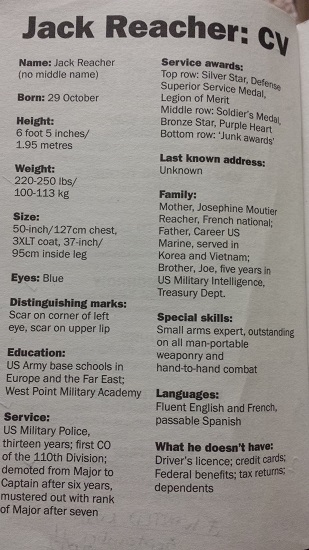
Jack Reacher's "CV" appears at the front of many of the Reacher books I own, and it came in handy. While reading, I often had to refer back to Reacher's physical stats as cited on this page in order to gauge whether some of his more outrageous "activities" could be humanly possible.

Jack Reacher’s “CV” appears at the front of many of the Reacher books I own, and it came in handy. While reading, I often had to refer back to Reacher’s physical stats as cited on this page in order to gauge whether some of his more outrageous “activities” could be humanly possible.


Did you know, for instance, that Reacher speaks fluent French, because his mother was French? And that she lived in Paris, where he went to visit her on a few documented occasions? True story, as far as fictional stories go. Reacher is half-French, and he enjoyed dining with his maman and brother at the Restaurant Polidor, a Parisian eatery that was established in 1845 and still, to this day, won’t accept credit cards.

Actually, I discovered Reacher while living in France. I spent much of the summer of 2012 wandering alone through le Vieux Nice (Old Nice) and the surrounding streets, and one day, it occurred to me that La Fnac, a French counterpart of the States’ Barnes and Noble, might carry some books in English. I wanted to read. Moreover, I wanted the instant gratification of plunging headfirst into fiction and losing myself in its depths. Struggling through French text with a dictionary in one hand and a fistful of my own hair (clenched tightly by the roots) in the other would be educational, but it wouldn’t suit my purposes. Or my hair. I wanted escapism.

I was happy to find an abundance of Alice Munro, T.C. Boyle and Joyce Carol Oates, all of whom I adore – Munro’s short stories, especially – and then I wanted some fun pulp fiction to round out my selection. Action, thriller and horror (as well as any hybrids of the three… and if we’re talking fiction genre hybrids, you can throw some science fiction in there, too) are my favorite pulpy genres, and I had no idea where to begin looking. I’d already read all of the available Stephen King, who works masterfully at the intersection of literature and pulp fiction (like no one else does, in my opinion), and I wasn’t familiar with any of the other authors on the shelves. So I started picking up novels at random and reading the blurbs on the back, choosing, in the end, The Affair by Lee Child.

That’s where I met Reacher.

It turned out that The Affair was a good place to start, because it’s one of just a few Reacher novels written in the first person. The majority of the novels are written in the third person. I felt like I got to know Reacher through the lens of his own perspective.

It took a few pages to get acclimated to Child’s writing style, but he had me hooked in no time. I finished the book in three days and headed back downtown. I knew La Fnac had another Lee Child novel on the shelf, because I’d deliberated between the two before selecting The Affair. I went back for Gone Tomorrow, and then I embarked on a Reacher search expedition wherever I could find books in English throughout the French Riviera, including Virgin Records (also in the Le Vieux Nice area, on la Rue Jean Medecin), and Les Galleries Lafayette (a French equivalent of Macy’s) located in Cap 3000, a mall at the end of the Promenade des Anglais between Nice and Antibes. I also scoured the Nice Etoile, a much smaller mall located down the street from Virgin Records on la Rue Jean Medecin.

Somewhere in there, Callaghan picked up one of my books (Gone Tomorrow) and got hooked on Reacher, too. We needed to find more!

Back in our little wilderness corner of the world in le Vercors – we divided our time between Rhône-Alpes and la Côte d’Azur – we searched for Reacher in La Fnac in Valence, as well as in Cultura (similar to the States’ erstwhile Borders).

Out of all of those places, we were only able to find one more Reacher novel, at Virgin Records in Nice, I believe. Bad Luck and Trouble.   

But – surprise! – we found many more at the Frankfurt airport in September, when we stopped over in Germany on our way to Los Angeles. Of course! Reacher novels aren’t just great pulp fiction – they’re great airport pulp fiction. With plenty of time to enjoy some good German beer and browse every newsstand we could find, we ended up boarding the plane with something like seven or eight Reacher novels. When we got to Los Angeles, we went to Barnes and Noble with The List and picked up the remaining six or seven. We headed back to France with 14 Reacher novels in our suitcase, then in possession of all 17.

The following summer – last year – we were in Austin, Texas when Child’s 18th Reacher book hit the shelves. I was thrilled to be right there!

That brings us to Child’s 2014 release. August 28. I’m waiting patiently, only glancing at the calendar every other day or so.

I’ve been asked which Reacher novel is my favorite, and that’s difficult to answer. I’d say it’s a tie between Gone Tomorrow and Bad Luck and Trouble. Persuasion would probably come in third.I also really enjoyed the three most recent titles, those that chronicle Reacher’s adventures post South Dakota debacle: Worth Dying For, A Wanted Man and Never Go Back (last year’s). It’s difficult to say, though. They’re all fantastically entertaining!

I can’t wait to see what Reacher gets himself into in this year’s installment of the ongoing adventure….